Taiwan: Anti-Torture Exhibition Included in "Respect Life and Commemorate July 20" Event (Photos)
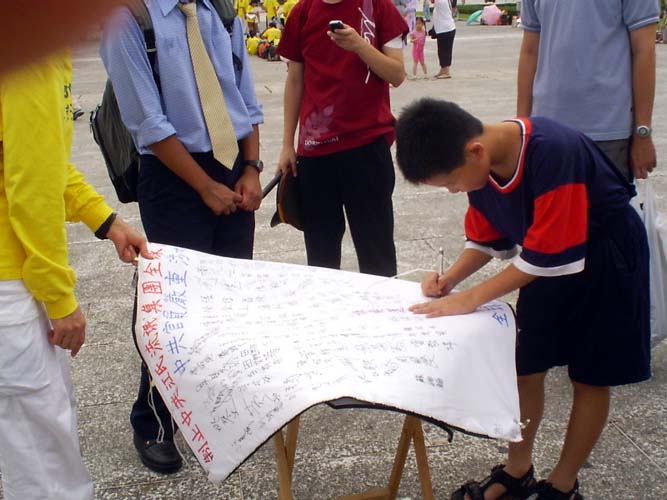
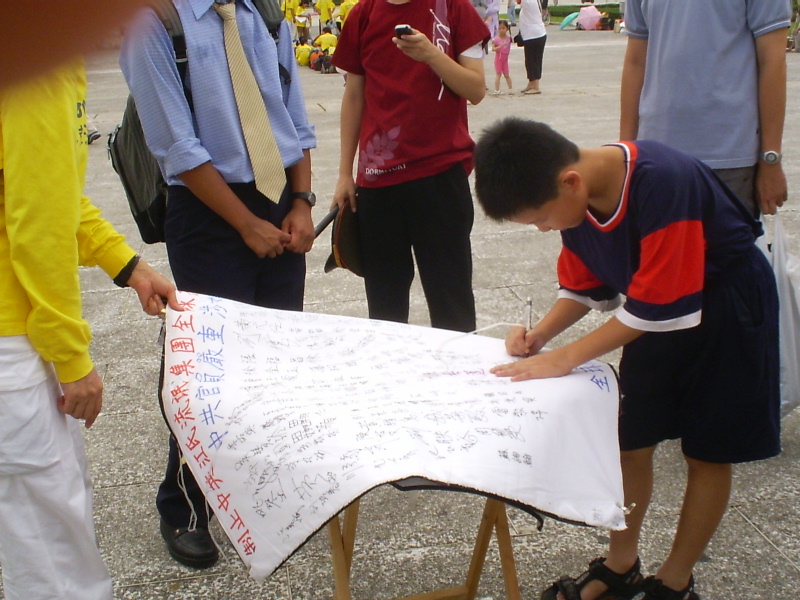
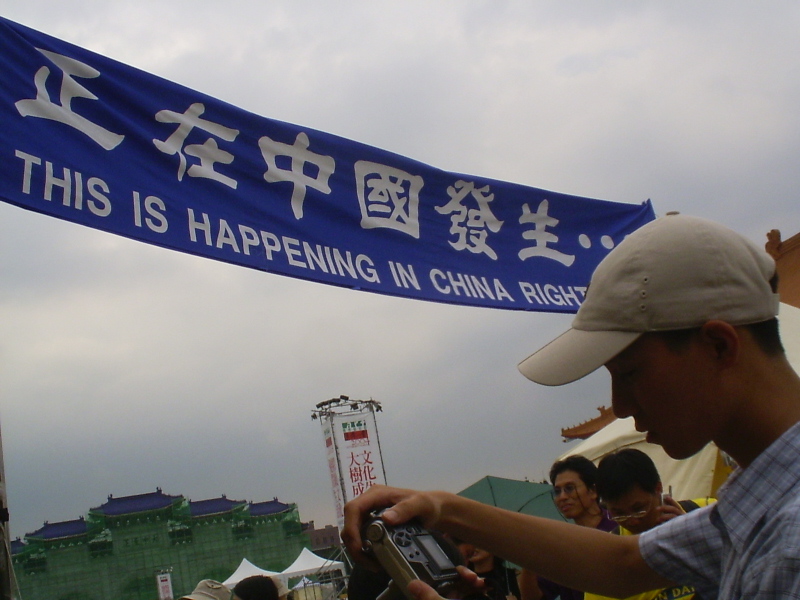
(Clearwisdom.net) July 20 marks the fifth anniversary of the Jiang group's persecution of Falun Gong. On the afternoon of Saturday, July 17, 2004, the Taiwan Falun Dafa Association held an event with the theme, "Respect Life and Commemorate July 20" in front of the Chiang Kai-Shek Memorial Hall. It called upon people from all walks of life to be concerned about the ongoing persecution in China. Because the facts of the persecution of Falun Gong practitioners was not widely known to the public due to the Jiang group's tight information blockade, practitioners conducted an anti-torture exhibition. Real persons simulated eleven methods of torture used by the Jiang group in its suppression of Falun Gong. These included slave labor, being tied to a dead person's bed, confined in a small iron cage, digging bamboo sticks under the fingernails, burning with heated irons, force-feeding, injecting unknown drugs, hanging by handcuffed wrists, tightly tying and pressing, and the tiger bench torture. The purpose of holding this exhibition is to allow more people to learn about the cruel persecution of Falun Gong, and to call upon people to work together to stop it. Numerous people signed the petition that was written on a large cloth.
|
|  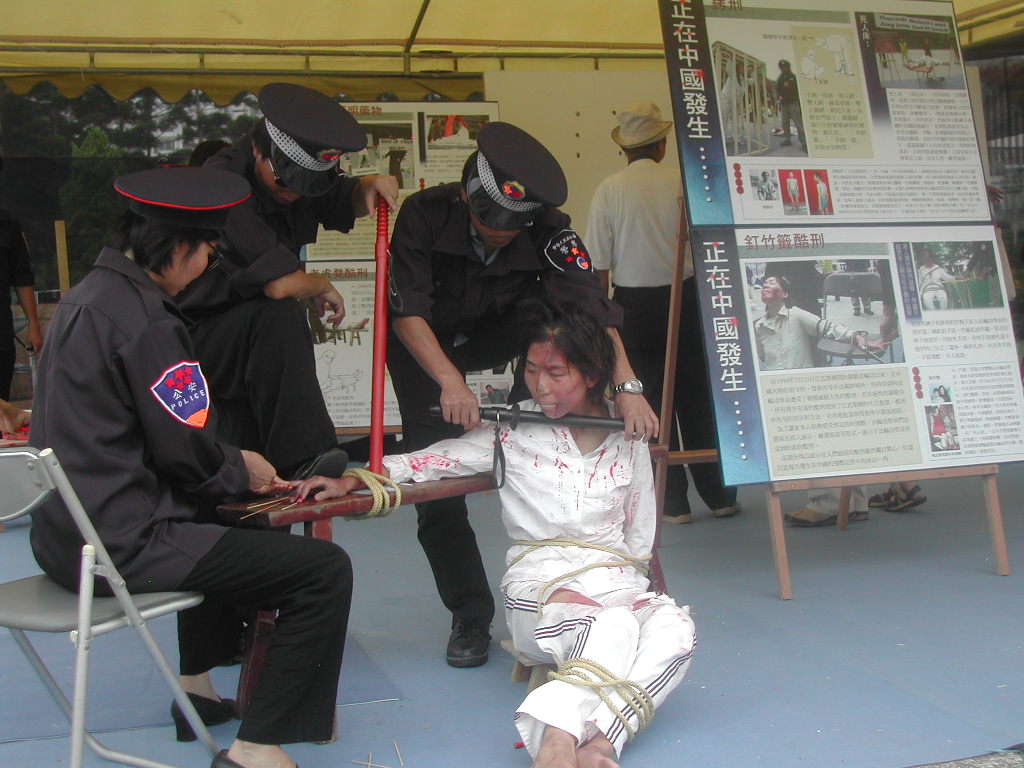 Live reenactment: Digging bamboo sticks under the fingernails |
|  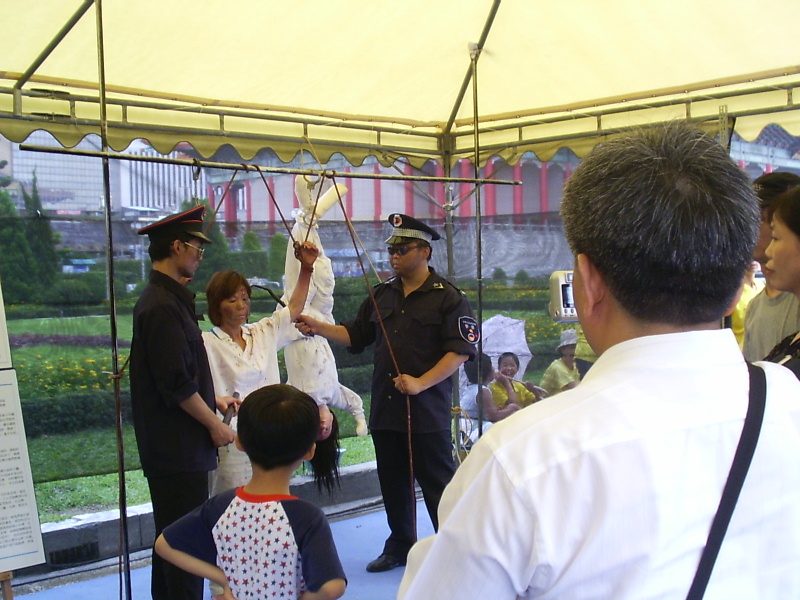 Live torture reenactment draws people's attention |
| 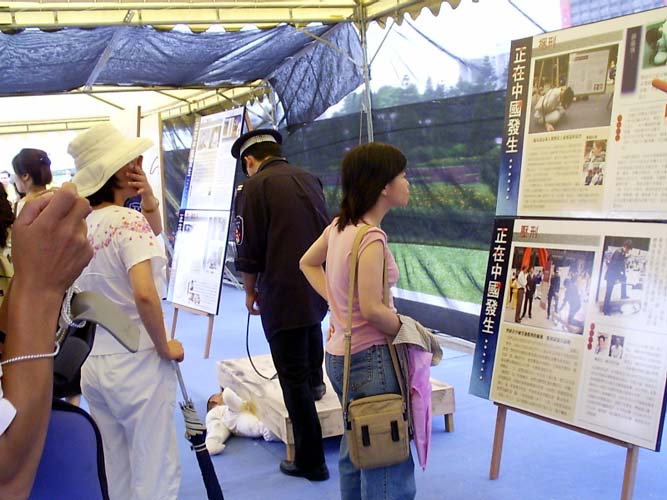 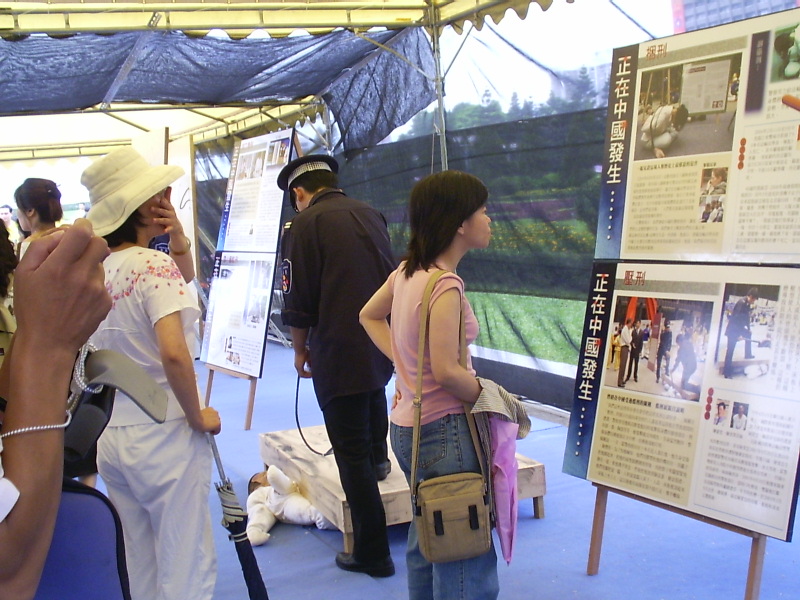 Visitors read descriptions on the posters |
|
| 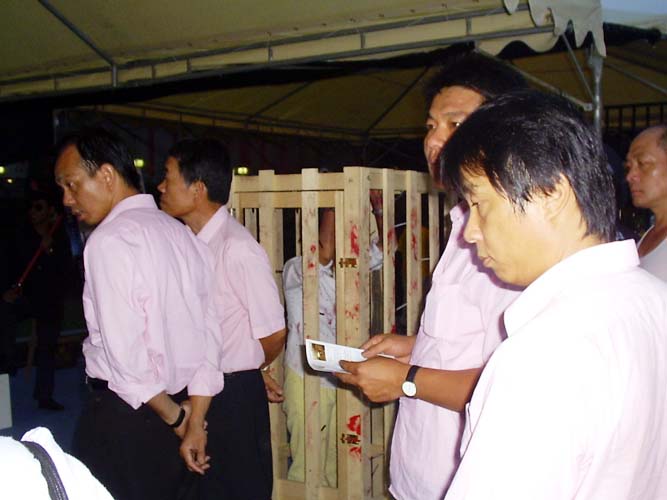 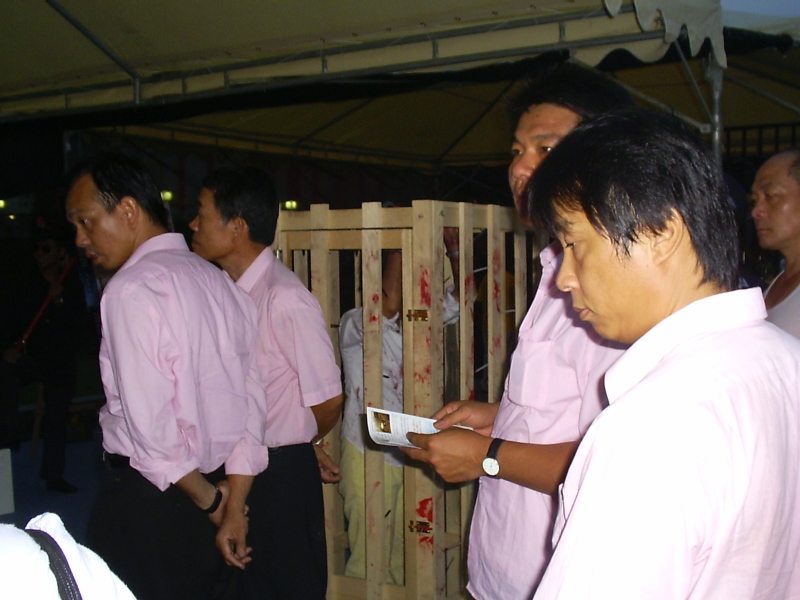 Visitors |
| 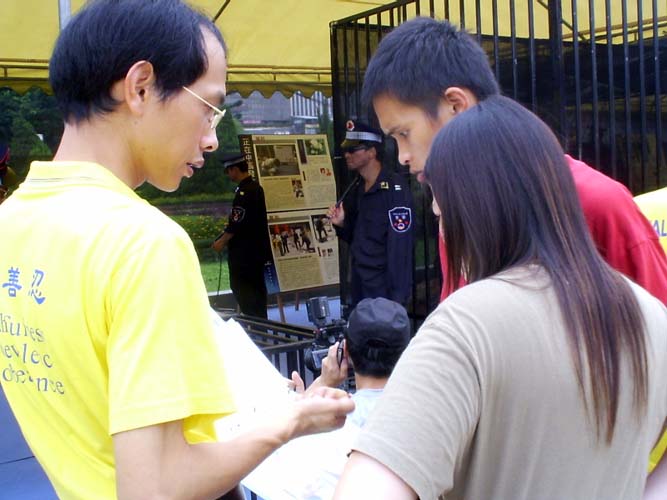 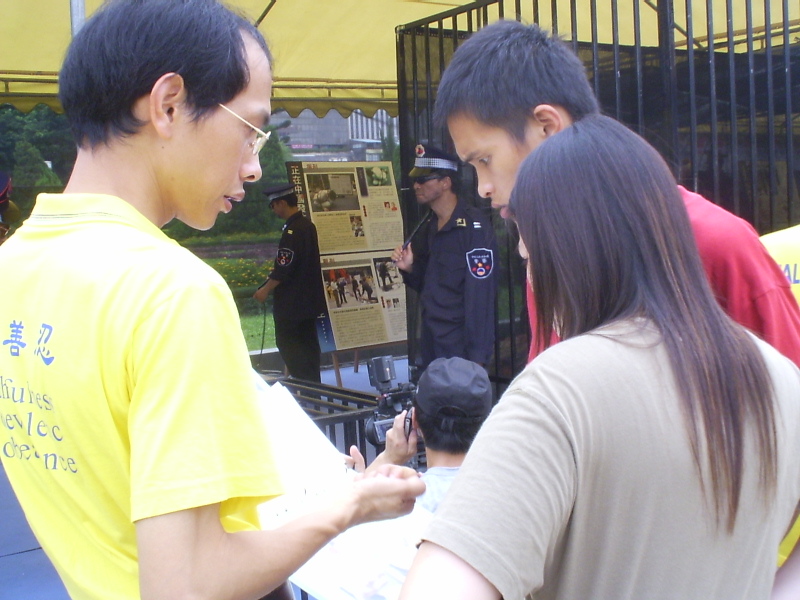 Practitioners explain the persecution facts |
| 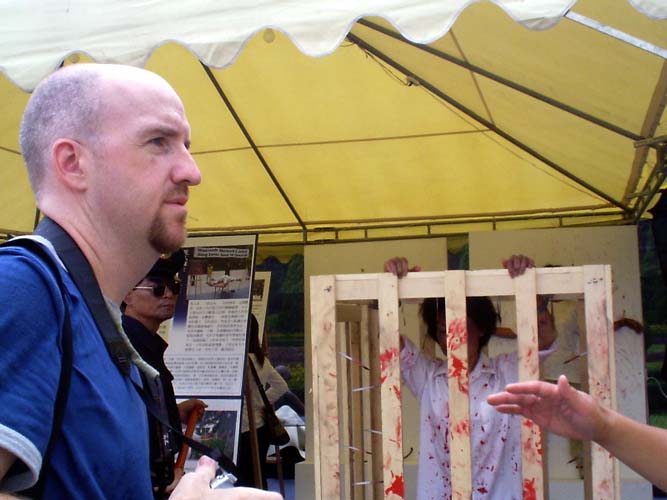 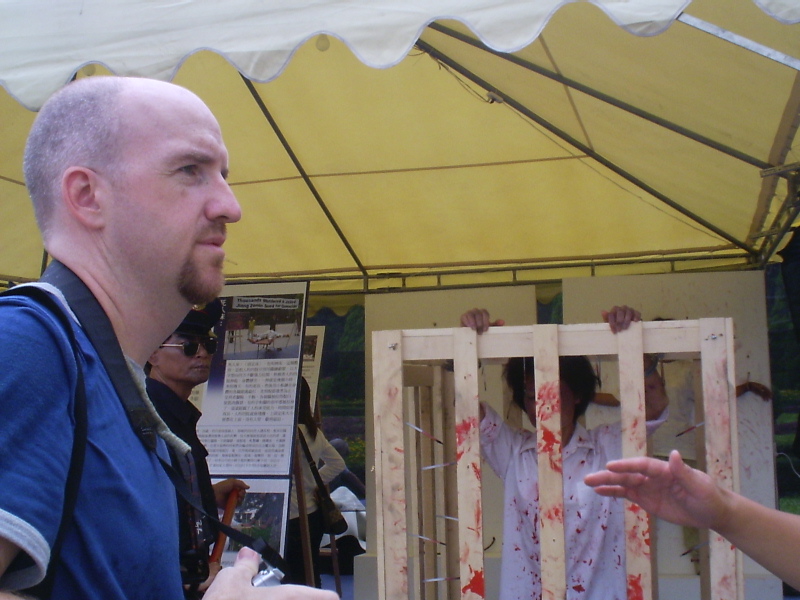 A foreign visitor |
|
| 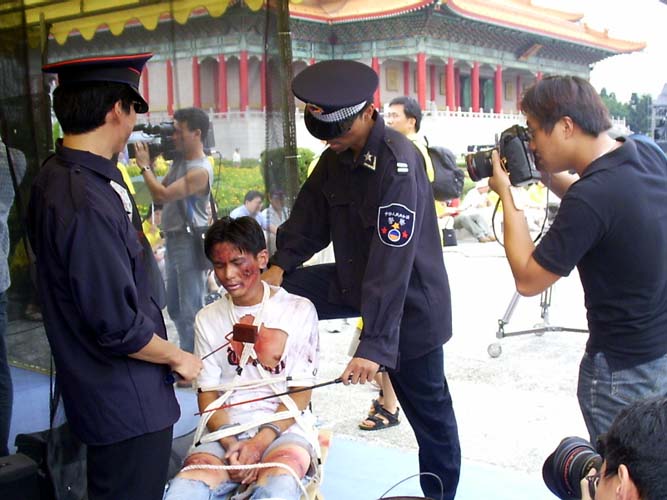 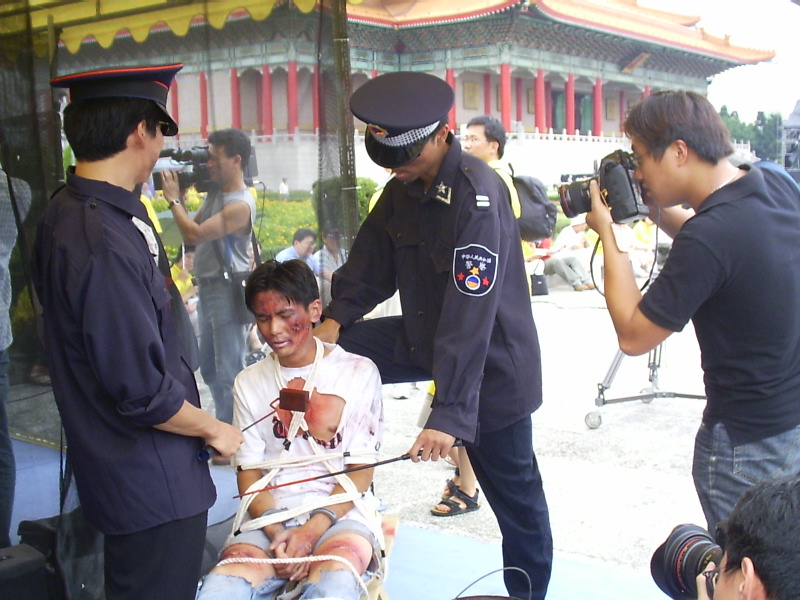 Reporters take photos of the live reenactment |
| 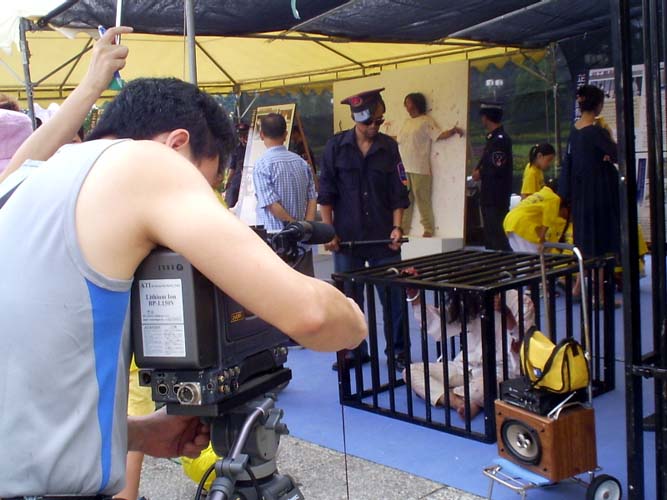 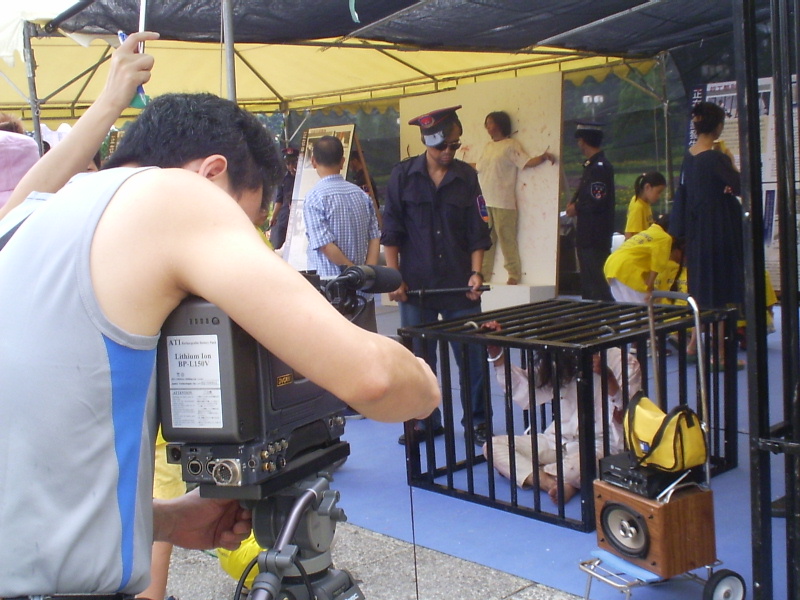 Reporter from TV station videotapes the scene |
| 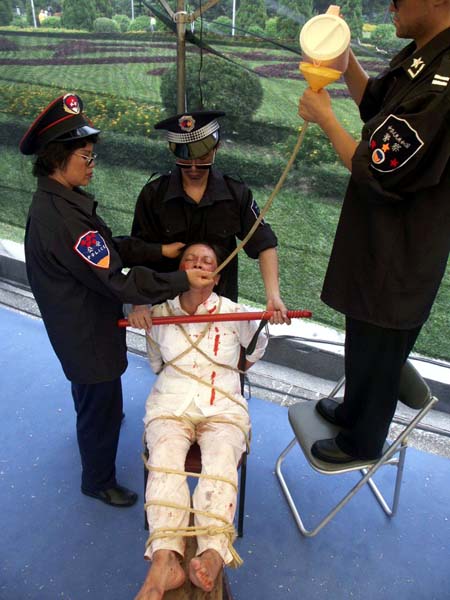 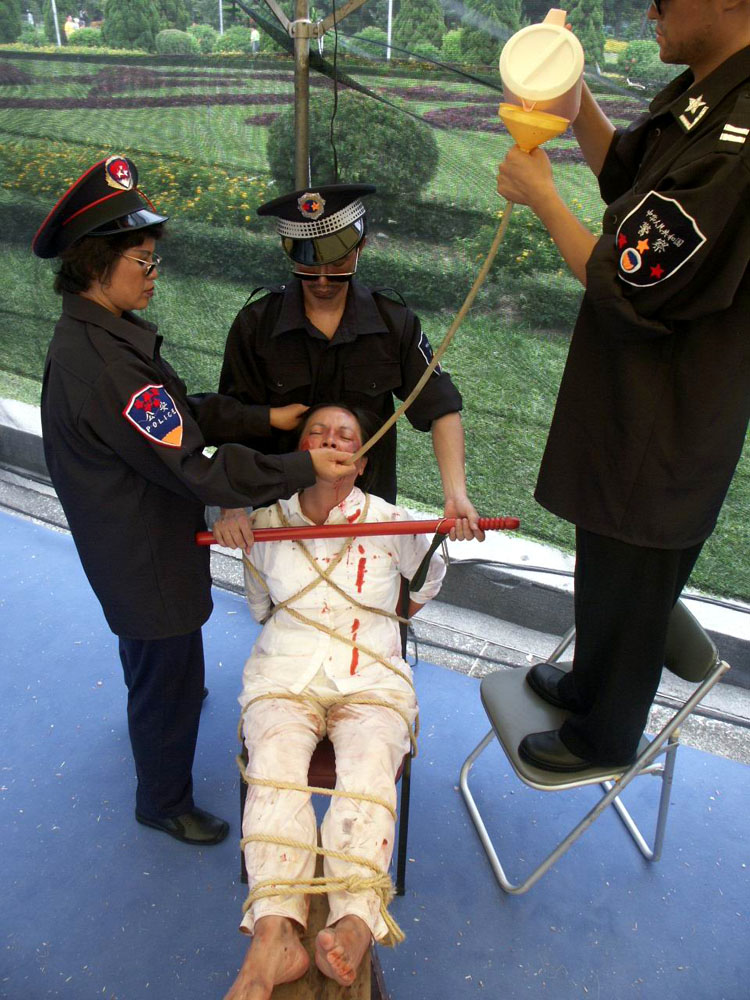 Live reenactment: Force-feeding |
|
|
|
|
|
|
|

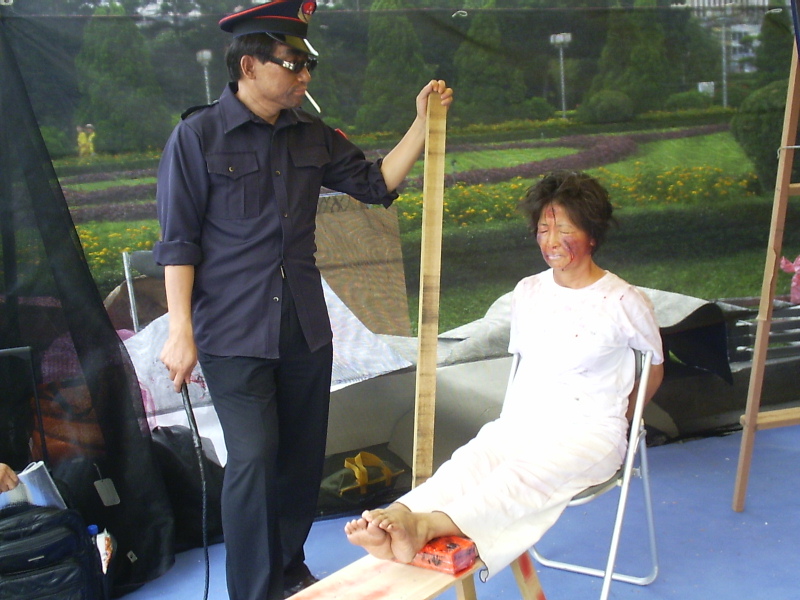
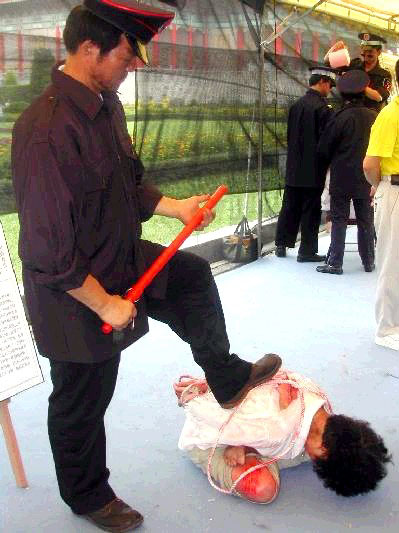
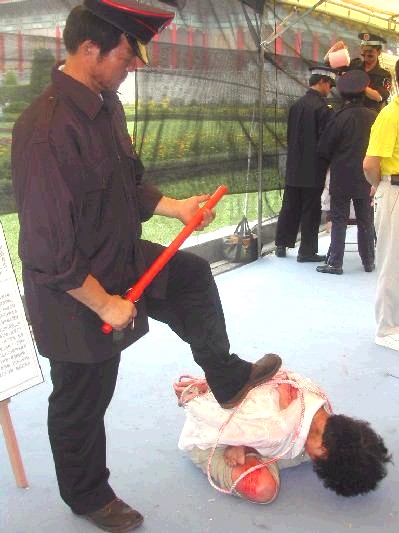

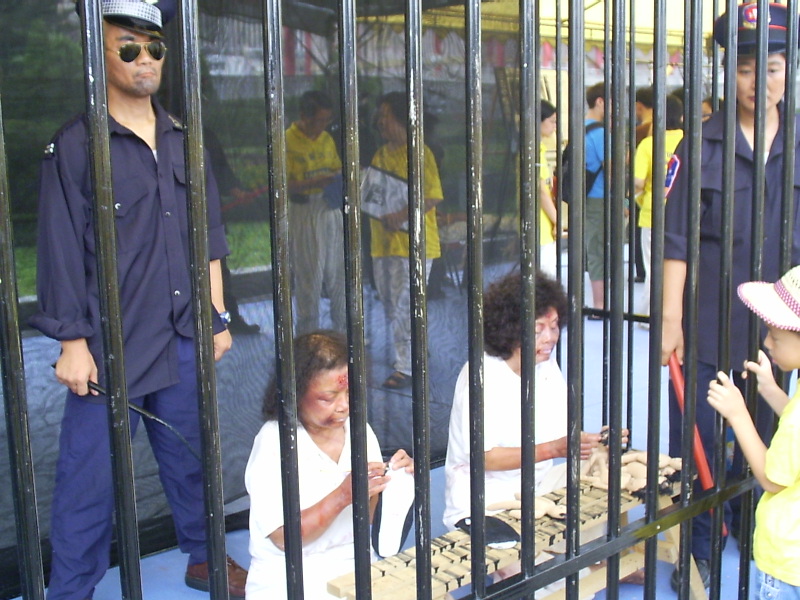
|
|
|
|
|
|
|
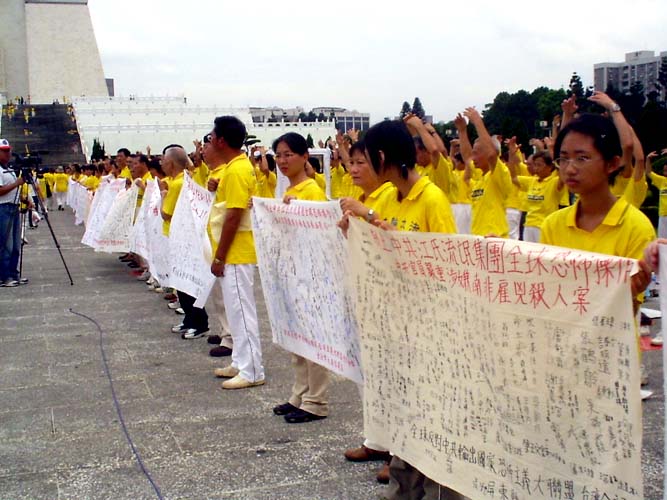
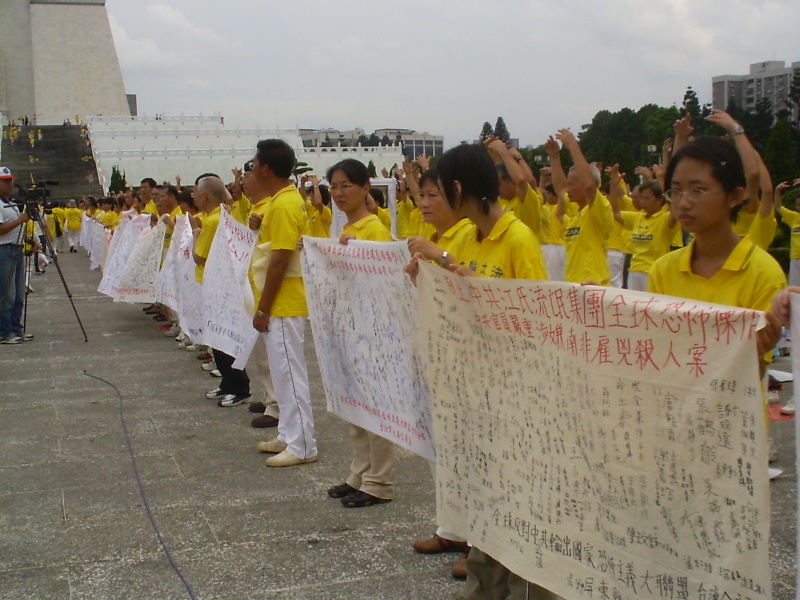

Practitioners who participated in the demonstration said that there are more than one hundred methods of torture used against Falun Gong practitioners in China, and they are much more severe than those displayed in this exhibition. The eleven methods of torture reenacted here are only the tip of the iceberg. Many of the torture methods are too bloody or graphic to display, such as sexual abuses, water dungeon, long periods of electrical shocks, and letting wolfhounds and poisonous scorpions bite practitioners. The eleven methods exhibited were fairly easy to demonstrate, and practitioners took turns demonstrating these tortures every hour. One practitioner sat in lotus position and was tied to the ground with ropes only loosely tied on him. Even so, after one hour, the practitioner felt very uncomfortable and was soaked with sweat. It's hard to imagine how horrible it is for fellow practitioners in China who are tightly tied for very long periods of time. The suffering must be tremendous. Some practitioners taking part in the display could not help shedding tears for practitioners in China and hoping that their demonstration awakens people's conscience, causing them to stand up and stop the Jiang group's inhuman persecution of Falun Gong.
Many people were shocked and deeply touched. They watched for quite some time, and attentively listened to practitioners' explanations. One young man said that he could not imagine that such inhumane acts are taking place in the 21st century. He sympathized with the victims very much. He said that on the other hand it is not surprising that this kind of thing is occurring in China because China's human rights record is the worst in the world. As for the Jiang group extending its state-run terrorism overseas, including the shooting incident in South Africa, people can directly see through to who is behind these wicked acts. Taiwanese people love freedom, and human rights extend beyond the borders of countries. People should stand up to call for an end to the atrocities in China.
An elderly gentleman from China said to practitioners, "Your reenactment is so real. I visit China once a year and I have witnessed these. I'm aware of these kinds of things. The Chinese ruling party is really inhumane. When I saw such a vivid reenactment, I almost cried. What you are doing is great! People should learn about these facts." A visitor was very surprised to learn that such cruel torture is used in China. He said that in a park in Harbin, a city in northeast China, he saw a cloth banner saying that Falun Gong was not allowed to be practiced there. He said that people in China did not enjoy freedom.
A group of college students said, "Such ruthless persecution has lasted for five years and we are not even aware of it. You (practitioners) should hold more activities to raise awareness. You should contact the mainstream media and ask them to report on this." After learning that the imprisoned Falun Gong practitioners were forced to do slave labor to make products to be exported for the authorities, they said, "Don't buy the cheap products from China. Don't invest there unless they improve their human rights."
Many foreign visitors were shocked at the torture methods, remarking that they were too brutal, and took photos of the scenes. Some English-speaking practitioners further explained the persecution facts to them, and the foreign visitors asked what they could do to help. A Vietnamese maid took the day off and carried her boss's child to visit the display. She said, "These practitioners in China are almost tortured to death, but they are still so resolute. Falun Gong must be very good. I'll tell my boss to learn and practice it." A visitor who carried a child said that his neighbor had previously introduced Falun Dafa to him but at the time he was not interested in it at all. He remarked that after watching the anti-torture exhibition today, he understood more about Falun Gong and the persecution. He said that since practitioners from China still persist in the practice under such harsh torture, that Falun Gong must be good, otherwise they would absolutely not be so steadfast. He decided to take his child to learn Falun Gong.
Seeing that fellow practitioners would not give up their belief even when they were tortured so brutally, a number of new practitioners who just started practicing Falun Gong remarked that the exhibition encouraged them to be more resolute. They said they would work harder in their practice and do more to introduce Dafa to the public because Dafa is so precious, and they would treasure the opportunity. Some practitioners took their family members to visit the exhibition, allowing them to learn more about Falun Gong and to understand more about the persecution. They said that they would help practitioners spread the information to more people.