The CCP's Slow Response to a UN Inquiry on Organ Harvesting Generates More Concerns (Photos)
(Clearwisdom.net) Since the Chinese Communist Party's (CCP) atrocities of harvesting organs from living Falun Gong practitioners were exposed, though it is hard to believe such atrocities could happen in this 21st century, more and more supporting evidence has been collected suggesting that the atrocities are indeed taking place.
Soon after the atrocities were revealed, the UN Special Rapporteur on Torture and Other Cruel, Inhuman or Degrading Treatment or Punishment, Manfred Nowak, told the media that he would investigate. Nowak is the only UN Special Rapporteur on Torture who has made a visit to China to perform an investigation. He said that persecution cases of Falun Gong practitioners make up 66% of the the torture cases happening in China and the persecution of Falun Gong group is the most widespread and brutal.
Compelled by conscience, Canadian human rights lawyer David Matas and former Canadian Secretary of State (Asia Pacific) David Kilgour performed an independent investigation on the allegations of organ harvesting. Their report concluded that the atrocities are happening in China.
Though the report has received wide attention, many governments have failed to take a stand on this severe human rights issue. Instead, many of them kicked the ball to the UN, and waited for the UN investigation results.
To many UN special rapporteurs, organ harvesting is a new level of crime. In the past year, the organ harvesting atrocities have attracted attention from three UN special rapporteurs, who have contacted the CCP on several occasions requesting clarification and explanation.
Three UN Special Rapporteurs Sent Appeal Documents to China Regarding Organ Harvesting Atrocities
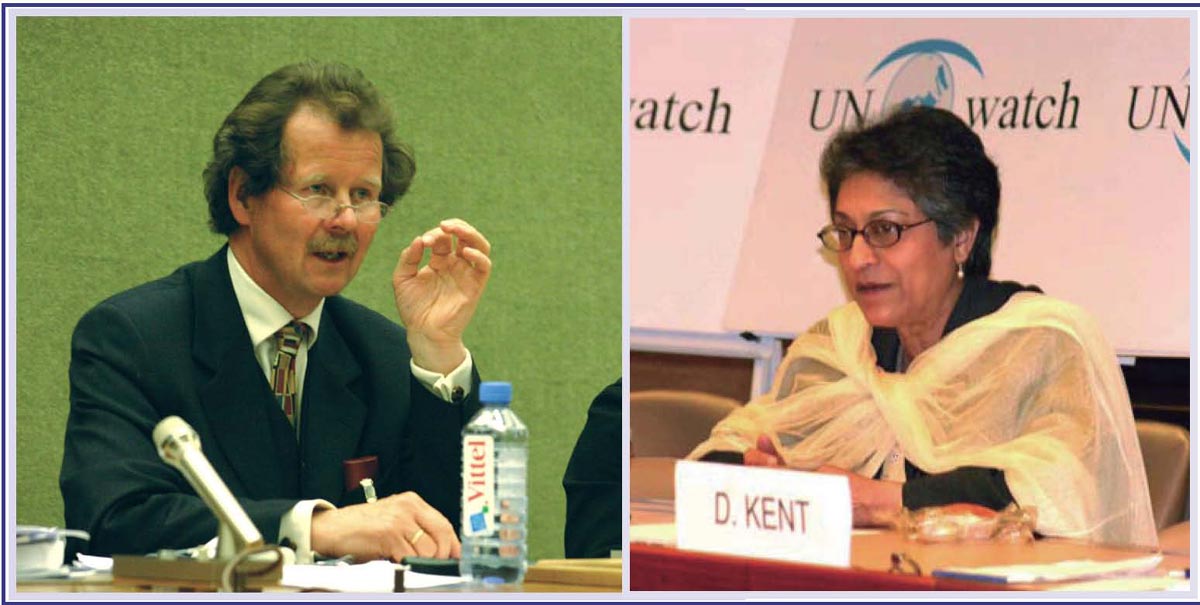
Special Rapporteur on torture and other cruel, inhuman or degrading treatment or
punishment, Manfred Nowak (left)
Special Rapporteur on freedom of religion, Asma Jahangir (right)
In the most recently released UN Annual Report, some investigation activities of the UN special rapporteurs on the organ harvesting atrocities and some official correspondent letters were disclosed. According to this report, on August 11, along with Nowak (special rapporteur on Torture) and Sigma Huda (Special Rapporteur on trafficking in persons), Asma Jahangir, the special rapporteur on freedom of religion, questioned the Chinese Communist regime regarding the organ harvesting allegations. Below is the original appeal document (http://daccessdds.un.org/doc/UNDOC/GEN/G07/117/05/PDF/G0711705.pdf?OpenElement, page 28):
"Communication sent on 11 August 2006 jointly with the Special Rapporteur
on the question of torture and the Special Rapporteur on trafficking in persons,
especially in women and children.
The Special Rapporteurs brought to the attention of the Government information they had received concerning organ harvesting. According to the allegations received, organ harvesting has been inflicted on a large number of unwilling Falun Gong practitioners at a wide variety of locations, for the purpose of making available organs for transplant operations. Vital organs including hearts, kidneys, livers and corneas were systematically harvested from Falun Gong practitioners at Sujiatan Hospital, Shenyang, Liaoning province, beginning in 2001. The practitioners were given injections to induce heart failure, and therefore were killed in the course of the organ harvesting operations or immediately thereafter.
It is reported that employees of several transplant centres have indicated that they have used organs from live Falun Gong practitioners for transplants. After the organs were removed, the bodies were cremated, and no corpse is left to examine for identification as the source of an organ transplant. Once the organs were removed they were shipped to transplant centres to be used for transplants for both domestic and foreign patients. Officials from several detention facilities have indicated that courts have been involved in the administering the use of organs from Falun Gong detainees.
It is reported that there are many more organ transplants than identifiable sources of organs, even taking into account figures for identifiable sources, namely: estimates of executed prisoners annually, of which a high percentage of organs are donated by, according to the statement in 2005 of the Vice Minister of Health Mr. Huang Jiefu; willing donor family members, who for cultural reasons, are often reluctant to donate their organs after death; and brain-dead donors. Moreover, the reportedly short waiting times that have been advertised for perfectly matched organs would suggest the existence of a computerized matching system for transplants and a large bank of live prospective donors.
It is alleged that the discrepancy between available organs and numbers from identifiable sources is explained by organs harvested from Falun Gong practitioners, and that the rise in transplants from 2000 coincides and correlates with the beginning of the persecution of these persons.
On organ transplants, in general, it has been reported that in March 2006, legislation was introduced which bans the sale of human organs and requires the donor to give written permission. The legislation also limits transplants to certain institutions, which must verify the source of the organs. This law came in force on 1 July 2006. Contrary to the Government assertion that human organs have been prohibited from sale, in accordance with the 1991 WHO guiding principles, it has been reported that up to this time Chinese law has allowed the buying and selling of organs, has not required that donors give written permission for their organs to be transplanted, there has been no restriction on the institutions which could engage in organ harvesting or transplants, there was no requirement that the institutions engaged in transplants had to verify that the organs being transplanted were from legal sources, and there was no obligation to have transplant ethics committees approve all transplants in advance.
CCP Late Response Raises More Questions
1. After the appeal document was issued, it took more than 3 months for the Chinese Communist regime to formally respond to the UN.
2. In the response, it claimed: "In order to clarify the facts, the Sujiatun District Government carried out an investigation at the hospital, domestic and foreign media including Japan's NHK and Hong Kong's Phoenix Satellite Network and Ta Kung Pao conducted on-the-scene interviews, and two visits were paid by consular personnel from the US embassy. Based on the results of these investigations it was discovered that the hospital only had 300 beds and was completely incapable of housing more than 6,000 persons... and there is no evidence to show that it is being used for any purpose other than as a public hospital."
It is a common sense that there is a dramatic difference between "visit" and "investigation." Investigations require international professionals and need to be performed according to international standards. How can media and consular officials perform an effective investigation? In addition, among the invited media, the Hong Kong media outlets are known to be pro-communist and the Japanese NHK never reported that visit.
Meanwhile, the special rapporteurs questioned several large hospitals which were likely involved in organ transplantation using organs harvested from living Falun Gong practitioners. The CCP had no response to address this aspect, implying that such allegations were true.
3. In the appeal document, the special rapporteurs questioned why the CCP enacted a new regulation on human organ transplant after the organ harvesting allegations were made. The CCP argued that the regulation was to reiterate the 1991 agreement with the WHO. This response is just absurd. Why hasn't the 1991 agreement been effectively implemented in the past 15 years (the regulation was to become effective on July 1, 2006)? This only suggests that the international community should examine whether the CCP has fulfilled any of its commitments that it made to all kinds of international organizations.
4. In their response, the CCP also claimed "The relevant Chinese Government agencies are drafting Human Organ Transplant Regulations in order to create the necessary regulation of human organ donation, registration, matching, and transplant." Again, this statement reveals that the regime is trying to cover up its crimes.
To summarize, the CCP's response to the UN's concerns about the organ harvesting allegations is: We are drafting more laws to regulate human organ transplant in China. Doesn't this suggest that all the allegations of organ harvesting were true?