(Clearwisdom.net) Shanghai Hali Toys Ltd is a large enterprise in China that produces toys. A subsidiary of The Haixin Group, the company exports some of its products to Europe and U.S. The company specializes in producing and selling stuffed toys. For some of the "Made in China" products that are exported, the production base are forced labor camps in Shanghai. In order to reduce costs and meet fast delivery deadlines, the company violates international trade laws. It colludes with the forced labor camp to enslave Falun Dafa practitioners and other inmates, forcing them to work extra long hours and do extra harsh labor work.
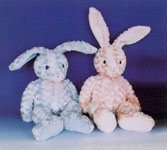
One of the products of Haili Toys Company
1. How the Products Are Produced
Labor camp officials disregard the law and human rights of the inmates. They focus on quantity and quick delivery of the product and do everything based on money. As a result, they produce batch upon batch of tainted products. The inmates are deprived of basic human rights, are enslaved and tortured mentally. They are punished for the smallest things--one punishment is to sit on a very low stool when eating meals. The inmates vent their anger on the products they are working on. They mix garbage from the floor--snotty tissues, peelings from food, and paper--with the cotton for the toy's stuffing. Some even use the toys to wipe tables and their shoes. When they are having naps on the floor in the summer, they use the toys as pillows.
2. How They Cut Corners to Make Quick Delivery
The forced labor camps focus on quick delivery. They train inmates known as "fast workers" to make money for them. There are drawings and process instructions for workers to follow. For example, for the above product, the nose of the rabbit was sewn on and the thread required to use was two. But the "fast workers" used four threads or even six threads to sew the nose--they make several stitches and the nose was finished. They cut corners to complete production quotas. To sew the bow on a stuffed rabbit required sewing back and forth several times; however, the "fast workers" make just one stitch to finish. For the rabbit's eyes, it is required to sew from the end of the neck up to one eye and then up to the head, then to come down to the other eye toward the end of the neck. Those "fast workers" just sew from one eye directly to the other eye. In this way they satisfy the labor camp's requirements: "quick, quick, quick" and "money, money, money." Falun Gong practitioners who refuse to be transformed have to eat prisoner's meals all the time and work extra long hours. Behind those products are endless pain the inmates suffered.
3. To Deliver Goods Earlier, Labor Camps Use Various Means to Avoid Factory Quality Controllers
In order to reduce production time, team leaders cut corners in quality in order to make big bonuses. For the sake of money, they train talkative people in prison as quality controllers. Once the goods are taken out of the labor camps' doors, it is none of labor camps' business. If the goods are to be re-done because of poor quality, an additional fee is charged. The factory quality controllers normally set up a check-up point in the forced labor camp and they visit the camp workshop to check the quality. But the quality controller in the camp will keep an eye on the factory quality controller. If the factory quality controller is in, the labor camp quality controller will ask those inmates who still have a conscience and produce the product up to standard and deliver their finished products to the factory quality controller. But most of the inmates have been trained by the camp police to be the "fast workers." One of the ways to cheat the factory quality controller is to have good relationship with him and let him ignore the quality. Or they try to keep the factory quality controller out of the workshops or they purposefully talk with them. Another tactic is to wait until 5:00 p.m. when the factory quality controller finishes work. Then they collect the finished goods without checking the quality. Inmates are forced to work until midnight and the factory quality controller will not stay after 5:00 p.m. In this way the goods from the labor camps are delivered. If the factory is not satisfied, the team leader in the camp will say: "This is a labor camp. We can only achieve the quantity and not the high quality." The factory cannot say anything because the products by the camp are produced at a low cost and delivered quickly. The factory uses the same techniques the labor camp uses to cheat the custom officials when they clear the customs.
In 2003, labor camps detained many Dafa practitioners. Those who were just detained or refused to be transformed were forced to work day and night. In order to keep their belief in "Truthfulness, Compassion and Tolerance" and to oppose the persecution, practitioners resisted. The police and perpetrators then used vicious methods to persecute practitioners. Except long-hour work, they make thugs come to watch over practitioners and incited hatred among inmates toward practitioners. They make practitioners eat "prisoner meals" for years.

The building in the above picture was completed in 2004. The first floor is "Qingyuan Super Market," the second floor is the electronic products assembly line for the Second Brigade, the third floor is the electronic products assembly line for the Fourth Brigade and the forth floor is a multi-function hall.
Why does the labor camp have endless work? Why does the labor camp have money to build the new building? Because so many factories choose the labor camps as their production bases for the low labor cost and for quick delivery. The factories associated with labor camps in Shanghai include: Shanghai Haili Toys Company, Shanghai Xujing Red Delta Stuffed Toys Factory, Shanghai Haifa Toys Company Ltd, Changfu Toys Company Ltd, Shanghai Toys No 7 Factory, Shanghai Global Toys Company Ltd and Shanghai Haiyan Toys Company Ltd.
In recent years many toys companies and factories have been set up in Shanghai. Many of them place orders with forced labor camps for the low cost of labor and commercial benefits. But the rights of the inmates are violated and the quality of the products is low. This practice is against the international trade conventions, interfere with the international market, make the prisons and the forced labor camps extremely busy, and inmates slaves.