(Clearwisdom.net) In her new book, A Year Without "Made in China", Sara Bongiorni describes her experience of how she and her family struggled to live a life without buying any products from China, including shoes, clothes, Christmas decorations, toys, electronics, a blender, furniture, etc. To avoid buying things "Made in China", literally everything became a struggle. The flood of cheap goods from China influences the daily lives of virtually all American people. Many products, though labeled "Made in America", are assembled from components made in China.

"Made in China" Children's Clothes
According to a report by the Associated Press, over 80% of toys on the American market are from China. The Globe and Mail reports: Canadian companies may produce products at one-tenth or even one one-hundredth of their regular cost if they manufacture in China. Sales figures of over one hundred types of products in over ten industries made in China rank first in their categories in the world market, including food, drugs, household electronics, and textiles. Products made in China are not only filling up Dollar Discount stores and general stores, basic daily essential goods, non-essential goods, luxury products and electric products, labeled "Made in China" are flooding the world. China has become the world's factory.
But when the world is enjoying the cheaply made-in-China products and Chinese people are proud of themselves in a nationalistic sense, how many of us ever give a thought to the question of why Chinese labor is so incredibly cheap? And, why do we not connect the cheap products with the detainees in China's forced labor camps?
Shanghai Three Gun Group produces underwear in Shanghai Women's Forced Labor Camp and sells the products in over seventy countries all over the world. This same forced labor camp also produces and exports toys for Shanghai Haixin Group Company Limited, Xuting Company, Shanghai Global Plastic Toy Company Limited, Shanghai Yousheng Toy Company Limited, Shanghai Shenxin Toy Co. Ltd., Shanghai Changfu Toy Co. Ltd., and others. Among the listed companies, Xuting Company produces over 4.8 million toys annually and exports all the toys through China Light Industrial Goods Import and Export Corporation and Shanghai Shenhua Import and Export Corporation to countries all over the world.
A production line has been set up in this forced labor camp to produce electrical components for Wujiang Electric Company. The same forced labor camp also produces shoes for Dafuni Shoe Company (http://www.daphne.com.cn) and food for Shanghai Qiaqia Food Company. The detainees have to work over a dozen hours every day under the threat of guards' electric batons and other tortures. Often, they have to work through the night. Of course, the detainees are not paid more than a token pittance for their work (often not enough to even cover the room, board and supplies they are charged back). Many detained Falun Gong practitioners protest this illegal persecution. The guards then instigate other detainees to beat the practitioners, puncture them with scissors, hang them with their arms and legs tied spread eagle, or deprived them of sleep for very long periods of time.
The Zhenglin Farming Foodstuff Co. Ltd (http://www.lzzhenglin.com, http://www.zhenglin.cn/eBusiness/GB/index.asp) in conjunction with the Dashaping Detention Center in Lanzhou and the No.1 Detention Center in Lanzhou, became the largest production base of roasted seeds and nuts in China. Their most profitable product is "Zhenglin Handpicked Melon Seeds" that are sold in North America, Australia and Asia. Around 10,000 inmates in a forced labor camp are being made to handpick these seeds. They use their teeth and mouth to crack open the Daban seeds, and then use their hands to peel off the cover and take out the seed. Many people had their teeth chipped, hands injured and nails pulled off as a result of this work. They work dozens of hours from morning to night without any pay. In December 2001, 57-year-old Falun Gong practitioner Wan Guifu could not finish the quota due to his broken nails, bleeding and infected fingers as well as infected and swollen lips. As a result, he was beaten to death. Two other Falun Gong practitioners, Liu Lanxiang and Zhang Fengyun, also died in a forced labor camp.
One day after New Years Day in 2002, Liu Ping, a former pilot and practitioner from Tianjin, was tortured to death in the Shuangkou Labor Camp. The guards in the camp had forced him to work for twenty hours sorting recyclables that gave off poisonous fumes and chemicals. Soon, Li Ping contracted tuberculosis and scabies. He was covered with scabies that severely itched, as well as swollen and infected sores. Even then, the authorities refused to let him go home. They threatened that if he did not write the repentance statement, he would have to die there. Li Ping was forced to work beyond his limits until he died of exhaustion. He lay on the floor and never woke up. When he died, his body was covered with blood and pus. As a result, his clothing stuck to his body. They could barely take off his clothes.
These hideous atrocities are happening in China, in hundreds of prisons and forced labor camps throughout the country, to Falun Gong practitioners who refuse to give up their belief in Truthfulness, Compassion and Forbearance.
Shortage of Prisons and Forced Labor Camps Due to Persecution of Falun Gong
On July 1999, Jiang Zemin, the former dictator, launched an inhuman and cruel suppression of Falun Gong practitioners simply out of his jealousy, and carried out the policy of "defaming their reputation, bankrupting them financially and destroying them physically" to replace the law. The most common persecution practice has been to skip legal trials, and arrest the practitioners and send them directly to forced labor camps. The authorities don't take any personal responsibility regarding the use of torture, because of the directive, "Falun Gong practitioners who are beaten to death are counted as suicides, and their bodies are to be directly cremated without identifying the person."
At that time, there were 670 prisons and 310 forced labor camps (the total capacity was 310,000), which were quickly overloaded. For instance, the number of prisoners in the Xin'an Women's Forced Labor Camp in Beijing increased from one hundred to one thousand; 95% of them were Falun Gong practitioners. China's internal statistics showed that at the end of April 2001, 830,000 practitioners had been arrested. On July 4, 2001, the American Broadcasting Company reported that about half of the people in China's jails were Falun Gong practitioners. According to these numbers, there were about two or three million practitioners arrested across the country at the beginning of the persecution.
In 2001, 120 modern prisons were built under authorization from the Chinese Department of State. They contained three different levels, and the capacities were 3000, 5000 and 10,000 respectively. Hundreds and thousands of people worked overtime to extend the prisons. In May 2005, the CCP assigned over 8,000 police corps to the project. Thirty prisons were built and were used until June 2004. In some places, military camps were reconstructed into temporary prisons. However, prisons in about 20 cities were overcrowded and reported as emergencies to the central committee of the CCP.
According to the Duty Report to the People's Congress by the director of Beijing City Judicial Bureau, during the three years from 2002 to 2005, Beijing spent 430 million yuan to renovate and expand six prisons, with total construction of 240 thousand square meters. Beijing also spent 230 million yuan to renovate and expand five forced labor camps, constructing 90 thousand square meters and tripling the total capacity of the forced labor camps.
Because the Chinese Communist Party (CCP) continuously provides huge budgets to prisons and forced labor camps all over China that imprison Falun Gong practitioners, these prisons and forced labor camps are expanding, enlarging their work areas and upgrading their equipment.
Lured by the high bonuses and promotions, the guards work hard to "transform" and persecute Falun Gong practitioners. Under the beautiful facade and their civilized appearance, the prisons and forced labor camps use high pressure tactics to cover up the blood and darkness deep inside.
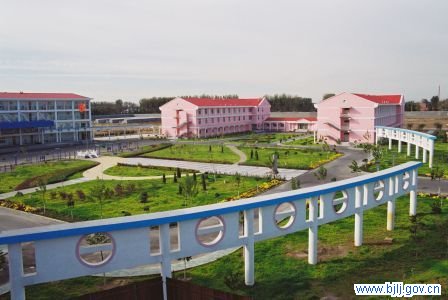
Beijing Women's Forced Labor Camp -- designed to look harmless from the outside
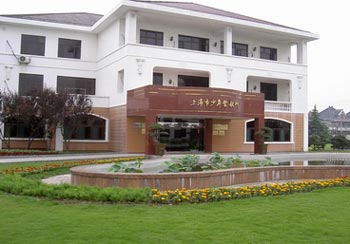
The Main Building of the Shanghai Juvenile Delinquent Rehabilitation Center
Prison Business Increases as Persecution Intensifies
The CCP uses forced intensive labor to "reform people's minds." The prisoners are forced to build and fix roads and bridges, work in coal mines, and build dams. They receive no stipend and are often beaten and go without food. After the economic reform, the prisons and forced labor camps had to provide its cheap labor to outside businesses to balance their budgets. Industry and prison business merged. Before the persecution against Falun Gong started in 1999, most prisons and forced labor camps were in financial difficulties and their facilities were terribly run down. A large number of them were about to go bankrupt. After the persecution started, the CCP put in large amounts of financial aid to prisons that kept a lot of Falun Gong practitioners. In 2003, the CCP used the judicial system to prohibit prisons and camps from working with outside businesses. This way, the CCP was able to offer its tremendous financial aid to the camps and prisons in exchange for their service to lock up and persecute practitioners. The CCP also secured its control and power over these prisons and camps. The CCP paid for all the expenses to run the prisons and camp operations. The state became an investor of the prison camps. All property still belongs to the prison camps. The income tax, property tax, and land-value added tax were waved. The prison camps took this unbelievable opportunity and started their "no overhead business" with the land and factories of the state, and free slave labor. They attracted numerous foreign investors and became profitable by making export goods in their manufacturing units. The CCP's prison industry took off from there.
Take Henan Rebecca Holding Group Co. Ltd. for example. The company runs many forced labor camps to make wigs and it manufactures the most wigs in the world. The company started in November 1999 and exported US$49.43 million in wig products in 2002, and US$142 million in 2006. The Henna Rebecca Co. owns over 65% of the wig market in the US. Its products are sold in over 30 countries in north America, Europe, Africa, and Asia. In the company's semi-annual financial report in 2005, its top ten stock holders include the six largest banks in the world - the Deutsche Bank, HSBC Holding, the ING Group, Merrill Lynch, Morgen Stanley, and Union Bank of Switzerland. Henan Rebecca and a British company founded the Hynedale Ltd. functioning as its business headquarters in Europe.
In recent years, Henan has developed into the world's largest wig product manufacturing base with over one hundred companies and they own a quarter of the world's wig market. All these wig product companies stem from the Xuchang Third Forced Labor Camp in Henan and the Shibalihe Women's Forced Labor Camp in Zhengzhou. Those prisoners are forced to work about 12 hours a day.

-
The Henan Rebecca Holding Group Co. Ltd. Building
-
The front door of the Xuchang Third Forced Labor Camp in Henan
-
Illustration of forced labor inside the Xuchang Third Forced Labor Camp in Henan
-
Illustration of the torture method known as "whole-goat barbecue" used in the Xuchang Third Forced Labor Camp in Henan
To follow the CCP's policy to eradicate Falun Gong, guards in prison camps try to force Falun Gong practitioners to give up their belief with intensive slave labor and brutal torture. Because there wasn't enough manpower in the wig manufacturing factory, the Xuchang Third Forced Labor Camp buys Falun Gong practitioners (US$10/person) from other forced labor camps such as the Beijing Dispatch Station and Beijing Forced Labor Camp. It also secretly kidnapped many practitioners from throughout China to work in the factory. The Xuchang Third Forced Labor Camp in Henan was awarded the designation of "State Civilization Unit" for "combating Falun Gong" by the central government and the 610 Office. The Judicial Department also awarded the Zhengzhou Shibalihe Forced Labor Camp for using strait jackets on female practitioners. The "outstanding performance in 'transforming' Falun Gong practitioners" from the Shibalihe Forced Labor Camp was set up as an example for other camps to follow.
After many years, many forced labor camps run different manufacturing businesses at the same time. They even merge with other companies and turn into multi-business chain groups. Products coming out of these forced labor camps are no longer limited to hand-made chopsticks, Christmas ornaments, and other small goods. Their business covers automobile parts, machine parts, electronics, power industry, chemical industry, construction materials, pharmaceuticals, personal products, and agriculture, forestry, and mining products, and more.
Take Shandong Province for example. The Shandong Lineng Group Co. has six prisons that work for it and seven daughter companies. Their businesses include power, coal, concrete, machinery, agriculture, transportation, investment, and construction. The Lineng Group is a multi-billion dollar company. It was honored as the top power company in China and one of the top 500 large business in the country.

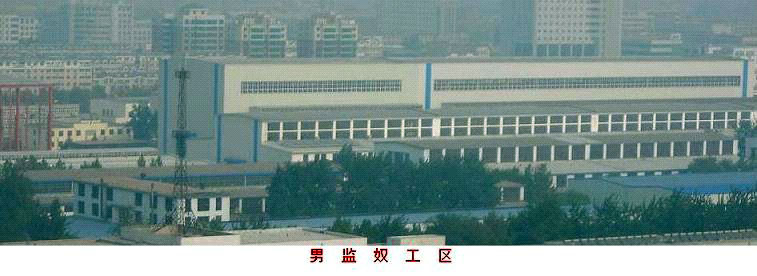
The Shandong Prison exports large power generators and motors. In 2006, the GDP in Shandong rose to 15.3 percent and ranked number one in the nation. However, people in Shandong are very poor. Take Jining City in Shandong for example. There are several coal mine industries based on Jining Prison. The GDP of Jining City was 17.4 percent but the people's average income was the bottom two percent in the nation. The enormous cash made by the prison industry and the strong impact of the prison industry on the normal industry and the labor market can be seen.
These prison industries use all means to cover their labor sources and use their extremely cheap goods to lure foreign investors to help them export and sell their products made by forced labor. These foreign investors unknowingly violate the laws in their own countries and international treaties, and at the same time disrupt the international market. Companies making similar products doing legal business are facing bankruptcy. Consumers who do not know the story behind the products they purchase indirectly trample on human rights and participate in the persecution of those simply pursuing their spiritual beliefs.
(To be continued)